Sleep Disruption
Insomnia or difficulty sleeping, and waking up at night short of breath.

Drowsy during the day? Snoring loudly or waking breathless? You may be one of more than 12 million Americans affected by sleep apnea.
Sleep apnea is a condition in which your breathing stops periodically during sleep, as many as 20-30 times per hour. Are you drowsy during the day with no explanation? Do you snore loudly or wake up breathless in the middle of the night? If you're experiencing any of these symptoms, you may be one of more than 12 million Americans who are affected by sleep apnea. Contact our Cranbury practice or call (609) 395-9100.
Sleep apnea is a condition in which your breathing stops periodically during sleep, as many as 20-30 times per hour. Each time you stop breathing in your sleep, the resulting lack of oxygen alerts your brain, which temporarily wakes you up to restart proper breathing.
Since the time spent awake is so brief, most people with sleep apnea don't remember it, and many believe they are getting a good night's sleep when, in fact, they are not. The constant wake-sleep, wake-sleep cycle prevents those with sleep apnea from achieving deep sleep, resulting in a constant drowsy feeling during the day.
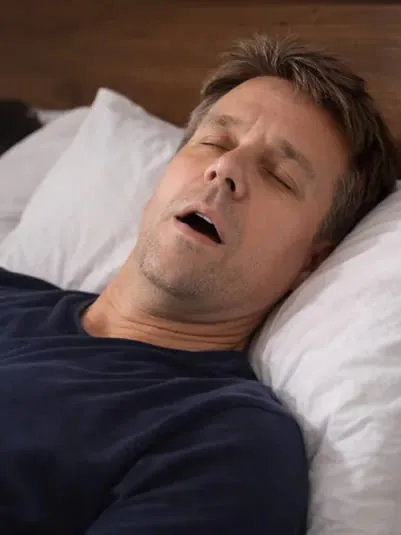
The following symptoms can indicate the presence of sleep apnea. If you notice one or more of these, contact our practice.
Insomnia or difficulty sleeping, and waking up at night short of breath.
Loud snoring at night, with snorting or choking sounds that indicate a restart of breathing.
Headaches upon waking in the morning, a common sign of interrupted, low-oxygen sleep.
Falling asleep unintentionally during the day and extreme drowsiness throughout the day.
There are three categories of sleep apnea.
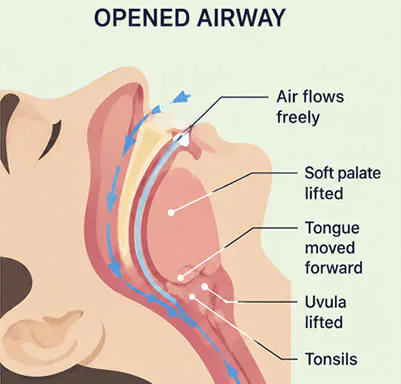
The most common type, OSA occurs due to a physical blockage, usually the collapsing of the soft tissue in the back of the throat.
Less common, central sleep apnea occurs when breathing stops because the muscles involved don’t receive the proper signal from the brain.
Some people suffer from “mixed” or “complex” sleep apnea, which is a combination of obstructive and central.
Obstructive sleep apnea is more common in males than females, and more common in older adults (40+) than younger adults and children. However, anyone — regardless of gender or age — can suffer from sleep apnea.
Other risk factors include obesity, smoking, drinking, use of sedatives or tranquilizers, and family history. Central sleep apnea strikes most often in people with heart disorders, neuromuscular disorders, strokes, or brain tumors.
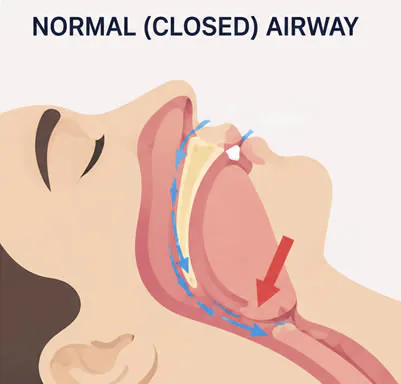
Sleep apnea is considered a serious medical problem and if left untreated it can lead to high blood pressure, increasing the risk of heart failure and stroke. The ongoing state of fatigue caused by sleep apnea can lead to problems at work or school, as well as danger when driving or operating heavy machinery.
Sleep apnea can also cause complications with medication or surgery; sedation by anesthesia can be risky, as can lying flat in bed after an operation. If you know or suspect you suffer from sleep apnea, let your family doctor know before taking prescribed medication or having surgery.
Treatments for sleep apnea depend on the severity of each individual case, and the type of apnea.
Basic treatment can be behavioral — patients are instructed to lose weight, stop smoking, or sleep on their sides instead of on their backs.
Oral devices can be used to position the mouth in such a way that prevents throat blockage. Depending on your situation, we can custom-create one for you.
In more severe cases, surgery may be the best option. A specialist can determine whether surgery is appropriate for your case.
Contact our practice, and we can refer you to a sleep apnea specialist. The specialist may recommend a sleep study to diagnose the precise extent of the problem, and can prescribe appropriate treatment.
Depending on your situation, treatment may involve an oral device that we can custom-create for you. As a prosthodontist experienced in custom oral appliances, Dr. Adibe works with your medical team so that, when an oral device is the right answer, it fits comfortably and does its job — positioning the mouth to keep the airway open.
Reviewed by Dr. Adibe · Clearbrook Advanced Dental Care, Cranbury, NJ
Sleep apnea is a condition in which your breathing stops periodically during sleep, as many as 20-30 times per hour. Each time you stop breathing, the lack of oxygen alerts your brain, which temporarily wakes you to restart proper breathing. The constant wake-sleep cycle prevents deep sleep, resulting in a constant drowsy feeling during the day.
Signs can include insomnia or difficulty sleeping, loud snoring at night, waking up short of breath, snorting or choking sounds during the night, headaches upon waking, falling asleep unintentionally during the day, and extreme drowsiness throughout the day. If you notice one or more of these, contact our practice.
There are three categories. The most common is obstructive sleep apnea (OSA), which occurs due to a physical blockage, usually the collapsing of the soft tissue in the back of the throat. Less common is central sleep apnea (CSA), in which breathing stops because the muscles don't receive the proper signal from the brain. Some people have 'mixed' or 'complex' sleep apnea, a combination of the two.
Obstructive sleep apnea is more common in males and in older adults (40+), though anyone can suffer from it. Other risk factors include obesity, smoking, drinking, use of sedatives or tranquilizers, and family history. Central sleep apnea strikes most often in people with heart disorders, neuromuscular disorders, strokes, or brain tumors.
Sleep apnea is considered a serious medical problem; if left untreated it can lead to high blood pressure, increasing the risk of heart failure and stroke. The ongoing fatigue can cause problems at work or school and danger when driving. It can also complicate medication or surgery — let your family doctor know before taking prescribed medication or having surgery.
Treatments depend on the severity and type of apnea. Basic treatment can be behavioral — losing weight, stopping smoking, or sleeping on your side. Oral devices can position the mouth to prevent throat blockage, and in more severe cases surgery may be the best option. Contact our practice and we can refer you to a sleep apnea specialist; depending on your situation, treatment may involve an oral device that we can custom-create for you.
Medical Disclaimer
This content is for informational purposes only and does not constitute medical or dental advice, diagnosis, or treatment. Sleep apnea is a serious medical condition that requires diagnosis, often via a sleep study, and may require referral to a sleep specialist. Consult Dr. Adibe, your physician, or a qualified professional regarding any questions about your health. Individual results may vary.
If you know or suspect you suffer from sleep apnea, contact Clearbrook Advanced Dental Care in Cranbury, NJ. We can refer you to a specialist and custom-create an oral device when one is the right fit.