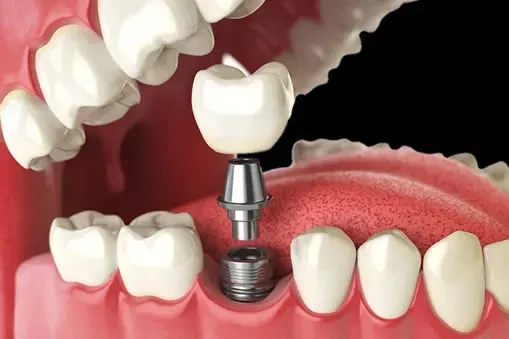
Single-Tooth Implants
When one tooth is missing, fractured beyond predictable repair, or no longer maintainable, a single implant replaces that tooth independently — without grinding down or involving the neighboring teeth.
Replace one tooth, several teeth, or a full arch with implants planned in 3D by a prosthodontist — restorations designed to look, feel, and function like natural teeth.
Clearbrook Advanced Dental Care in Cranbury, NJ places single-tooth, multiple-tooth, and full-arch dental implants — using titanium implant posts, CBCT 3D imaging for precise planning, and shade-matched zirconia or e.max crowns for a natural result. As a prosthodontist, Dr. Adibe plans both the surgery and the final restoration together, so the new tooth fits your bite and matches your smile. Patients from Cranbury, Monroe, East Windsor, and Plainsboro choose implants because they stop bone loss, restore full chewing strength, and look and feel like natural teeth. Schedule your implant consultation or call (609) 395-9100.
Missing teeth cause more than a cosmetic gap. They lead to difficulty chewing and speaking, shifting of the surrounding teeth, and gradual bone loss in the jaw. Of the available options, dental implants are widely considered the most effective long-term solution.
An implant is an artificial tooth root — a small titanium post placed directly into the jawbone. Once the bone fuses around it (osseointegration), a natural-looking crown, bridge, or denture attaches on top to complete the restoration. Because the implant stands on its own, it does not rely on grinding down healthy neighboring teeth the way a traditional bridge does.
The right approach depends on how many teeth are missing, the condition of the surrounding bone and bite, and your long-term goals for stability, function, and appearance — from a single implant crown to a full-arch fixed restoration.
When one tooth is missing, fractured beyond predictable repair, or no longer maintainable, a single implant replaces that tooth independently — without grinding down or involving the neighboring teeth.
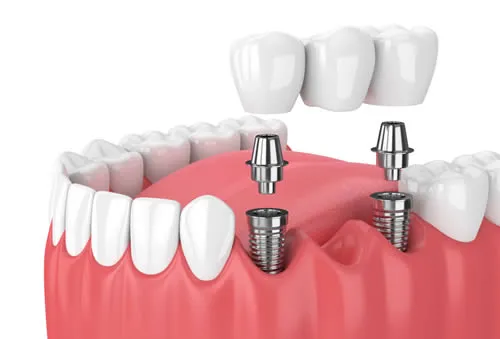
When several adjacent teeth are missing, implants can support a fixed bridge that restores the whole span — without a removable partial denture and without preparing healthy neighboring teeth.
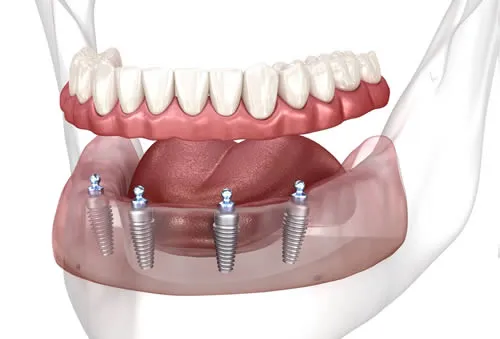
When bone volume, anatomy, or other factors make full reconstruction less appropriate, implant-retained (overdenture) options dramatically improve denture stability and reduce movement when eating and speaking.
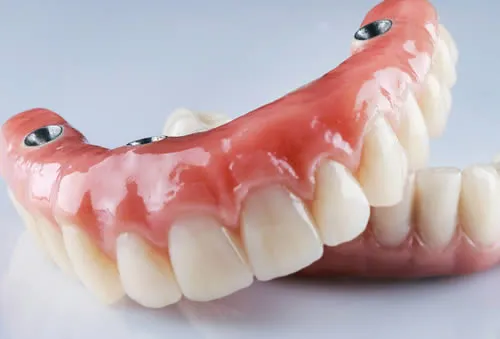
When an entire arch needs replacing, a small number of strategically placed implants can support a fixed full-arch prosthesis that restores bite strength, stability, and appearance — no traditional removable denture.
Real before-and-after results from Dr. Adibe's practice show the range of implant treatment — from a single missing tooth to a full-arch restoration. More transformations are on our before & after gallery.
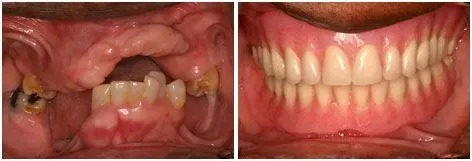
A single missing tooth replaced with a dental implant and a shade-matched crown — blended to the neighboring teeth so the result looks completely natural.
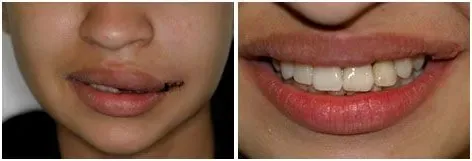
Several failing teeth restored with implant-supported restorations — chewing function and confidence rebuilt without relying on a removable partial.
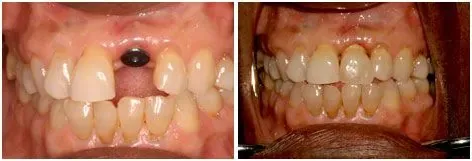
An arch of missing teeth restored with a fixed, implant-supported prosthesis — a stable, lifelike replacement for a full set of teeth.
Every implant case at Clearbrook Advanced Dental Care follows the same disciplined sequence, planned digitally before the patient is ever touched.
Every case starts with a thorough consultation and a digital workup:
The implant is placed in a single appointment, typically under local anesthesia, with sedation available for longer or more complex cases. Most single-implant placements take less than an hour. Afterward the implant integrates with the bone over the next three to four months — the period during which the bone grows around and locks it in place. During healing you wear a temporary tooth (or a temporary bridge or denture for multi-tooth cases), so the gap is never visible.
Once integration is complete, the final crown, bridge, or fixed prosthesis is fabricated and attached to the implant. As a prosthodontist, Dr. Adibe selects the material per case — zirconia for strength on back teeth, lithium disilicate (e.max) for lifelike appearance up front — designed to match your existing teeth in color, shape, and bite.
Your first appointment is a comprehensive consultation: medical and dental history, 3D imaging (often a CBCT), an examination of the existing teeth and tissue, and a conversation about your goals.
For placement appointments, comfort options include:
For patients with dental anxiety, we walk through the visit step-by-step beforehand, so the experience feels predictable rather than overwhelming.
Dental implants may be a good fit if you are:
This may not be the right option if you have:
The most reliable way to know is a consultation. If you have lost all or most of your teeth, you may be a candidate for All-on-4 dental implants or an implant-supported denture.

Here is how a single dental implant compares to the main alternatives. Dr. Adibe reviews every option with you so you can make the best-informed decision for your situation.
| Feature | Single Implant | Dental Bridge | Partial Denture |
|---|---|---|---|
| Prevents bone loss | Yes | No | No |
| Affects neighboring teeth | No | Requires grinding | Hooks attach |
| Longevity (crown) | 10–15+ years | 7–12 years | 5–10 years |
| Implant post itself | 20+ years / lifetime | — | — |
| Feels like a natural tooth | Yes | Close | No — removable |
| Cleaning | Normal floss | Special flossers | Remove and brush |
These are the questions patients ask most often before committing to treatment. Dr. Adibe addresses each one honestly at your consultation.
The upfront cost is higher than a bridge or partial, but implants last decades and prevent bone loss — often costing less per year over a lifetime. Payment options make treatment more accessible. We provide a clear estimate at your consultation.
Placement is performed under local anesthesia, with nitrous oxide available for relaxation. Most patients report less discomfort than a tooth extraction, and CBCT planning shortens surgical time and recovery.
With proper care — daily brushing and flossing, regular cleanings, and no smoking — the titanium implant itself typically lasts decades. The crown may need replacement after 10–15 years, but the implant stays in place.
Every procedure has tradeoffs, and a transparent conversation about them is part of informed consent. Dr. Adibe reviews these at your consultation and answers every question before treatment begins.
A dental implant is the closest replacement to a natural tooth available in modern dentistry. It fuses with the jawbone through osseointegration and, unlike a bridge, does not rely on neighboring teeth for support — preserving more of the natural structure.
The single biggest factor in long-term implant success is planning. CBCT 3D imaging is used for every implant case at Clearbrook Advanced Dental Care to map bone volume, nerve position, and sinus proximity before surgery. As a prosthodontist, Dr. Adibe plans the surgical placement and the final restoration as one connected case — so the finished tooth fits the bite and matches the smile, not just the gap.
Reviewed by Dr. Adibe · Clearbrook Advanced Dental Care, Cranbury, NJ
A dental implant is a small titanium post that replaces the root of a missing tooth. It is placed into the jawbone, where it fuses with the bone over a few months — a process called osseointegration. Once integrated, a custom crown (or a bridge or denture, depending on the case) attaches to the implant and replaces what is visible above the gum. The result functions like a natural tooth: you brush, floss, and chew with it the same way.
Most patients with adequate jawbone and healthy gums are candidates. The workup checks bone height, bone width, gum health, and the position of nerves and the sinuses. Patients with limited bone may need a bone graft first, or may be better suited to an implant-retained denture. Patients with active gum disease, uncontrolled diabetes, or heavy tobacco use may need to address those factors first. A consultation with Dr. Adibe answers the candidacy question definitively.
Most single-tooth implant cases run three to four months from placement to final crown — most of that time is the healing phase while the implant integrates with the bone. Multi-tooth cases run on a similar timeline. Full-arch cases can be longer when extractions or grafting are part of the plan. Your exact timeline is mapped out at the planning visit.
Implant placement is performed under local anesthesia, and most patients report less discomfort than they expected — many compare it to a routine extraction. CBCT planning shortens surgical time and recovery. Mild soreness for a few days afterward is normal and is managed with over-the-counter medication in most cases.
Implant-supported teeth are brushed and flossed much like natural teeth. Multi-tooth bridges and full-arch prostheses may need a floss threader or water flosser to clean underneath. With consistent home care and regular professional cleanings, the implant itself can last decades — and often a lifetime.
Most modern implant crowns are zirconia or lithium disilicate (e.max). Zirconia is favored for back teeth where strength matters most; e.max for front teeth where lifelike appearance is the priority. Both look natural and hold their color over time. As a prosthodontist, Dr. Adibe selects the material per tooth rather than applying one choice across the board.
With proper care, the titanium implant itself is designed to last 20+ years and often a lifetime. The crown attached to the implant may need replacement after 10–15 years of normal wear, but the implant post typically remains stable in the bone for decades.
Coverage varies widely. Some plans cover a portion of the crown or abutment but not the implant post itself. We verify your benefits and provide a personalized estimate at your consultation, and we offer payment options to make treatment manageable.
Implant placement carries risks including infection at the site, failure of osseointegration (the implant not fusing with the bone), nerve irritation, sinus involvement for upper-jaw implants, and peri-implantitis (bone loss around the implant) if hygiene is neglected. Dr. Adibe uses CBCT imaging and a careful medical-history review to minimize these risks.
Yes. At Clearbrook Advanced Dental Care in Cranbury, NJ, prosthodontist Dr. Adibe places dental implants for patients across Cranbury, Monroe, East Windsor, Plainsboro, and the surrounding area. Contact our office to schedule a consultation.
Medical Disclaimer
This content is for informational purposes only and does not constitute dental or medical advice, diagnosis, or treatment. Dental implant placement is a surgical procedure with risks including infection, nerve injury, implant failure, sinus complications, and bone loss. Candidacy depends on bone volume and overall health. Consult Dr. Adibe or a qualified dental professional regarding any questions about your oral health. Individual results may vary.
Schedule a consultation with Dr. Adibe to learn whether dental implants are right for you and to get a personalized treatment plan and estimate.