Porcelain
Tooth-colored porcelain blends with your natural teeth, making it the choice where appearance matters most — especially toward the front of the smile.
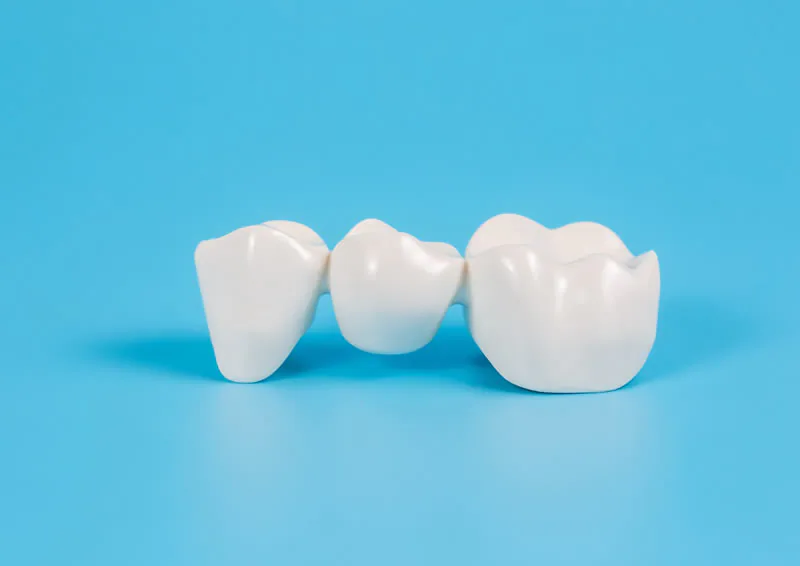
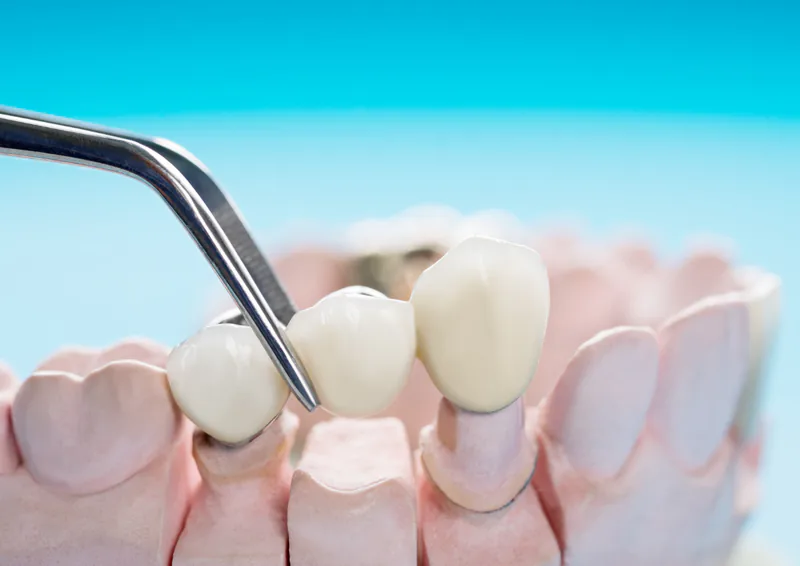
A bridge replaces missing teeth with artificial teeth — and literally bridges the gap where one or more teeth may have been.
A bridge may be used to replace missing teeth, help maintain the shape of your face, and alleviate stress on your bite. At Clearbrook Advanced Dental Care in Cranbury, NJ, prosthodontist Dr. Adibe designs crown-and-bridge restorations that look natural and restore comfortable chewing for patients across Cranbury, Monroe, East Windsor, and Plainsboro. Request an appointment or call (609) 395-9100.
A bridge replaces missing teeth with artificial teeth, looks great, and literally bridges the gap where one or more teeth may have been. Your bridge can be made from gold, alloys, porcelain, or a combination of these materials, and is bonded onto surrounding teeth for support.
Filling that gap does more than restore your smile. It helps maintain the shape of your face and alleviates stress on your bite by spreading chewing forces evenly across the arch again — rather than leaving the neighboring teeth to drift and overwork.

The success of any bridge depends on its foundation — the other teeth, gums, or bone to which it is attached. Therefore, it's very important to keep your existing teeth, gums, and jaw healthy and strong.
That is why Dr. Adibe evaluates the supporting teeth and the surrounding gum and bone before recommending a bridge. When those supports are sound, a bridge can serve reliably for years; when they are not, addressing them first — or considering a dental implant instead — protects your long-term result.
Your bridge can be made from gold, alloys, porcelain, or a combination of these materials. The right choice balances strength, appearance, and where the bridge sits in your mouth.
Tooth-colored porcelain blends with your natural teeth, making it the choice where appearance matters most — especially toward the front of the smile.
Gold is exceptionally durable and gentle on opposing teeth, valued where chewing forces are heaviest and strength is the priority.
Metal alloys offer high strength for the framework of a bridge and are often combined with porcelain for a balance of durability and looks.
A porcelain-and-metal combination pairs a strong substructure with a natural-looking surface — a versatile option Dr. Adibe selects per case.
A bridge may be a good fit if you are:
Another option may suit you better if you have:
The most reliable way to know is a consultation with Dr. Adibe at our Cranbury office.
Here is how a fixed bridge compares to the main alternatives for replacing missing teeth. Dr. Adibe reviews every option with you so you can make the best-informed decision for your situation.
| Feature | Dental Bridge | Dental Implant | Partial Denture |
|---|---|---|---|
| Fixed (non-removable) | Yes | Yes | No — removable |
| Affects neighboring teeth | Requires preparing them | No | Hooks attach |
| Replaces the tooth root | No | Yes | No |
| Helps maintain face shape | Yes | Yes | Partial |
| Cleaning | Floss threader / water flosser | Normal floss | Remove and brush |
| Depends on a healthy foundation | Yes — supporting teeth/gums | Yes — bone | Yes — gums/ridge |
These are the questions patients ask most often before deciding on a bridge. Dr. Adibe answers each one honestly at your consultation.
A bridge replaces missing teeth with artificial teeth, looks great, and is matched to your natural teeth. Porcelain options blend in so the result looks like your own smile.
A bridge is brushed like natural teeth, with the area underneath cleaned using a floss threader or water flosser. Keeping the supporting teeth and gums healthy is what allows a bridge to last.
The success of any bridge depends on its foundation. With healthy supporting teeth, gums, and jaw — kept strong through good hygiene and regular checkups — a bridge can serve reliably for years.
Every treatment has tradeoffs, and a transparent conversation about them is part of informed consent. Dr. Adibe reviews these at your consultation.
A bridge is only as reliable as the foundation it rests on — the other teeth, gums, or bone to which it is attached. As a prosthodontist, Dr. Adibe focuses on the restoration of teeth: he evaluates that foundation carefully, selects the material per case from gold, alloys, porcelain, or a combination, and designs the bridge so it fits your bite and matches your smile.
When a neighboring tooth is too compromised to support a bridge, or when preserving the natural teeth is the priority, he will walk you through whether a dental implant is a better long-term answer — so the plan fits your mouth, not just the gap.
Reviewed by Dr. Adibe · Clearbrook Advanced Dental Care, Cranbury, NJ
A bridge replaces missing teeth with artificial teeth, looks great, and literally bridges the gap where one or more teeth may have been. It is bonded onto the surrounding teeth for support, restoring the appearance and function of the missing tooth or teeth.
Your bridge can be made from gold, alloys, porcelain, or a combination of these materials. As a prosthodontist, Dr. Adibe selects the material based on where the bridge sits in your mouth, the chewing forces it must bear, and how natural you want it to look.
The success of any bridge depends on its foundation — the other teeth, gums, or bone to which it is attached. Therefore, it's very important to keep your existing teeth, gums, and jaw healthy and strong with daily brushing and flossing and regular professional cleanings.
When a tooth is missing, the neighboring teeth can drift into the gap and the bite can shift over time. A bridge helps maintain the shape of your face and alleviate stress on your bite by filling the space and restoring even chewing.
A traditional bridge is supported by the teeth on either side of the gap, which must be prepared to hold the bridge. A dental implant replaces the tooth root on its own and does not rely on the neighboring teeth. Dr. Adibe reviews both options with you so you can choose the right fit. Learn more about our dental implant services.
A bridge is brushed like your natural teeth, and the area underneath the artificial tooth is cleaned with a floss threader or water flosser. Keeping the supporting teeth and gums healthy is what allows a bridge to last. Bring it to every checkup so Dr. Adibe can confirm the fit and the foundation are sound.
Medical Disclaimer
This content is for informational purposes only and does not constitute dental or medical advice, diagnosis, or treatment. The success of a bridge depends on the health of the supporting teeth and gums. Consult Dr. Adibe or a qualified dental professional regarding any questions about your oral health. Individual results may vary.
Request an appointment with Dr. Adibe at Clearbrook Advanced Dental Care in Cranbury, NJ, and find out whether a dental bridge is the right way to restore your smile.